Interview: Adam Smith on building a destination hotel restaurant
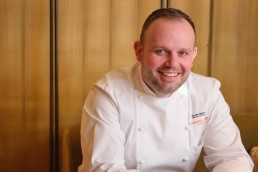
In the heart of the Berkshire countryside, Woven by Adam Smith at Coworth Park is a tribute to exceptional British produce and the stories behind each ingredient. Weaving together natural inspirations and Smith’s own personal history, it’s a warmly welcoming space that sets the scene for memorable, Michelin-starred dining.
In our interview, Smith talks about the defining moments of his career, the challenges facing the hospitality industry and the dishes and people that continue to inspire him.
When did you first fall in love with cooking?
When I started my first job in a kitchen, it was initially the atmosphere and camaraderie that sucked me in. It wasn’t until I moved to London and started working at The Ritz that I fell in love with the craft of cooking. I was still only 17 at this point, so I was bitten by the bug early on!
How would you describe your culinary style?
I would say that my culinary style is rooted in the classics but modernised with technique. Flavours are bold but visually elegant. We showcase the best of British ingredients, which we season with flavours from further afield.
What is your culinary vision for the menu at Woven?
The vision for Woven has always been to create a gastronomic destination that guests are prepared to travel to experience. We want to showcase the very best ingredients possible. The food should be beautifully presented in a manner that’s exciting, of course, but ultimately, when you close your eyes and eat something, it needs to be delicious!
Do you have a favourite dish on the menu?
One of my ultimate all-time favourite dishes is our Turbot Jubilee, for a couple of reasons. Firstly, because I feel it represents our cooking style perfectly: based on a very old-school classic dish that we have evolved with modernity to make it relevant and exciting for the modern diner. Secondly, because of the personal connection, having cooked this as my winning dish for the Roux Scholarship in 2012. Of course, we have developed and perfected it along the way.
What is the most important lesson you’ve learned during your career?
Having always worked in big kitchens and teams, undoubtedly the most important lessons have always been around leadership and people management. To lead a team of 50-plus chefs is not an easy task and often throws up challenges, so I learnt early on that I needed to focus on this aspect of my role. It is also one of the most rewarding parts. Being part of a high-performing team is exciting and rewarding in many ways!
What are the biggest challenges faced by the hospitality sector at the moment, and how are you tackling them?
The biggest challenges facing the hospitality sector at the moment, I would say, are the continuously rising operating costs, which hit all sectors of the industry. It’s incredibly tough at the moment, particularly for those small independent businesses. But one thing that is true of the hospitality industry is that we are incredibly resilient and creative. If we work together, we will be able to bring about the developments and changes needed to help create a sustainable future.
Which chefs have inspired you?
There are far too many to name, but what I would say is that I’ve always drawn inspiration from and admired the mavericks of the industry – those who have the confidence to follow their own vision, challenge the norms and develop a style and experience unique to them without giving in to fashion and trends. I believe that commitment to authenticity is the best source of creativity, and these are the chefs that history tells us have pushed innovation within the industry and helped it evolve in numerous ways.
What is your approach to sustainability in your cooking?
Sustainability comes to us in numerous ways. In our cooking, it is rooted in the sourcing of our ingredients, ensuring that they are being produced in a manner that represents our values and gives us the best possible taste. Once the ingredients are in the kitchen, we endeavour to minimise waste, making the most of every product while maximising flavour output. A key part of this has been creating a kitchen culture that is efficient, resourceful, and respectful of both the produce and the environment.
What would you likeyour next project to be?
We are currently working on our summer pop up restaurant, Tide, which is an al fresco restaurant that showcases the best of British seafood. It opens in late June and runs throughout the summer months. Hopefully, at some point, we can find a permanent home for it all year round!
What is your favourite dish, and who cooks it?
At the moment, my favourite dish is a tomato and burrata salad with basil and warm focaccia. A couple of years ago, I went on a family holiday to Tuscany and my daughter fell in love with the dish and started making it at home. Before that, she wouldn’t eat tomatoes. Now it’s a regular on our dinner table, and I love that she likes to make it, loves to eat it and enjoys the conversation and memories it provokes.