Interview: Jordan Taylor on open-fire cooking and local produce at The Great Bustard
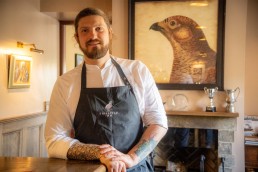
Growing up in Brighton, Jordan Taylor first learnt to cook at home with his family. A love of the outdoors, fishing, foraging and cooking over open campfires heavily influenced his cooking style.
Inspired by celebrity chefs such as James Martin, Gordon Ramsay and Marco Pierre White, Taylor began his professional career working at Michelin-Starred House of Tides for chef Kenny Atkinson. Having learnt the ropes, he later made the move to London where he worked at three-Michelin-starred Restaurant Gordon Ramsay, working his way around every section of the kitchen.
Taylor’s next move took him to Moor Hall in Ormskirk, working under chef Mark Birchall, before moving on to be Sous Chef at The Pass at South Lodge. Now living in Wiltshire, Jordan has brought his passion and creativity to The Great Bustard kitchen in his first role as Head Chef.
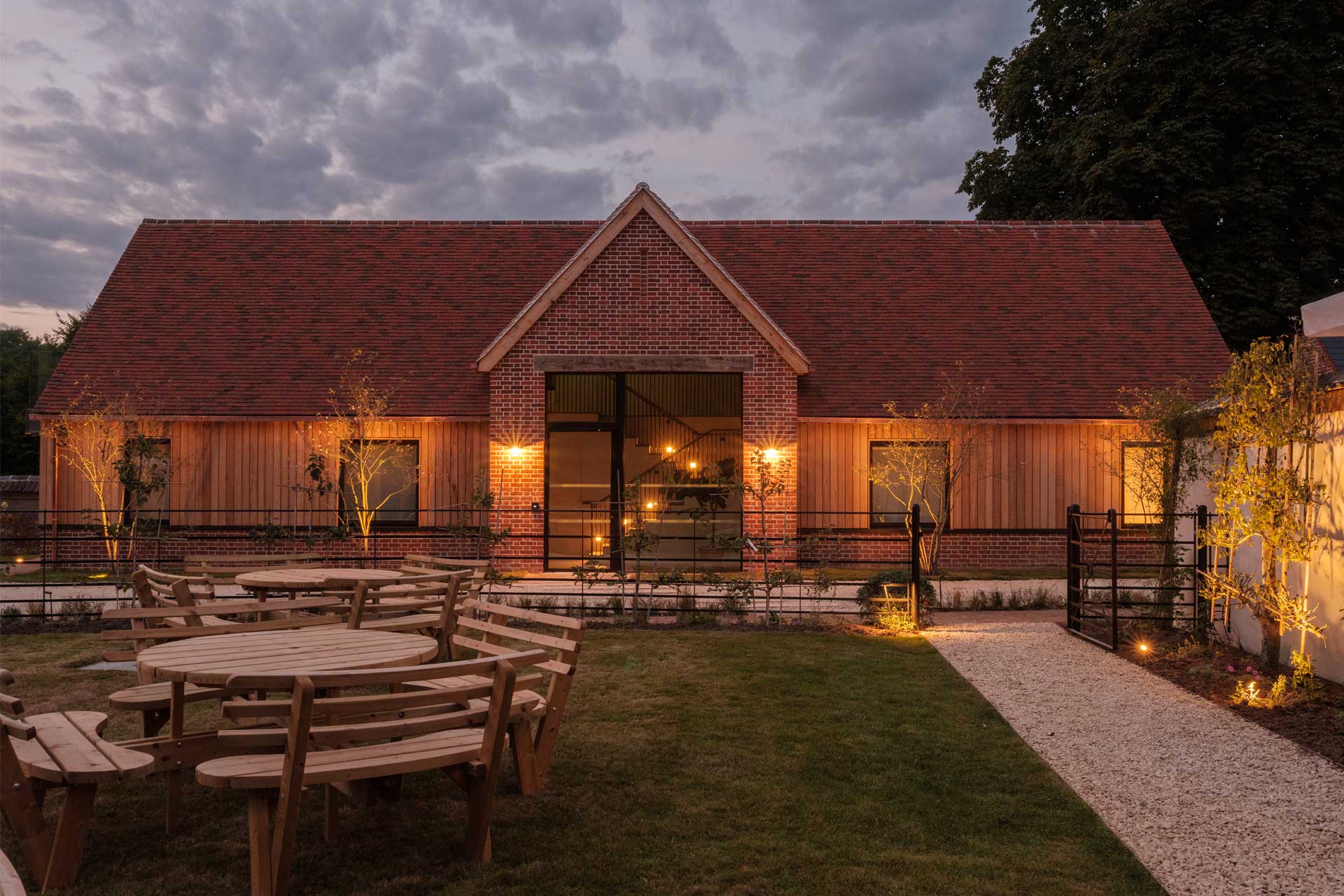
Here, Taylor works closely with local producers such as Springbottom Farm, sources from the best small-scale suppliers across the UK, and uses fruit and vegetables straight from The Great Durnford Estate.
When did you first fall in love with cooking?
I have always been passionate about food and cooking from a young age, and was forever helping in the kitchen when I could, but I think my true obsession came when I started working in professional kitchens – the fast-paced energy, heat and hard work that was required to make even the simplest food was inspiring.
How would you describe your culinary style?
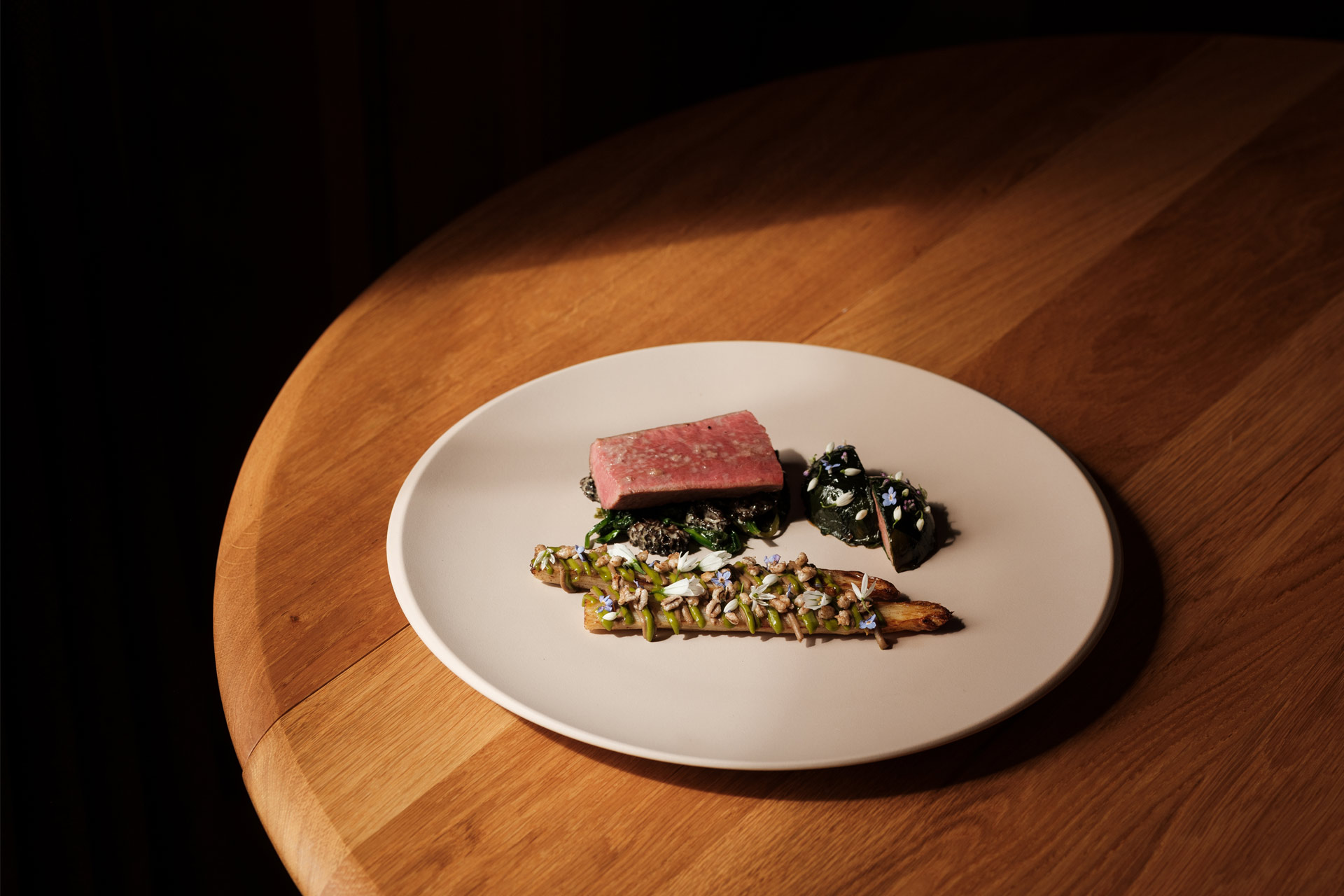
I would say my style is natural and technical. I draw a lot of inspiration for my cooking from a lot of different places such as where I have worked, travelled and eaten, but foundationally I would say that my food is driven by nature and what is in season, outside the front door, growing and grazing in the fields and woods.
What is your culinary vision for the menu at The Great Bustard?
The vision for the menu here at The Great Bustard is ultimately to create an incredible space that is a hub for the community to eat delicious food, enjoy nice drinks and relax, whilst also having a destination restaurant that is serving locally sourced quality produce in an exciting and creative way.
Do you have a favourite dish on the menu?
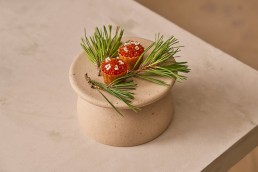
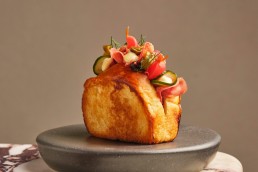
We are so fortunate here to be able to be host to some amazing game on the menu sourced straight from the Great Durnford Estate. Our ‘KFP’s’ (Kentucky Fried Partridge) are a perfect bar snack to enjoy with a cold local beer, and the estate lamb is a real showcase, featuring across all menus from our signature shepherd’s pie croquettes to wonderful best end of saddle served with braised crispy lamb shank, sweetbread and seasonal vegetables. Not forgetting of course our slowly roasted lamb on our knockout Sunday Menu.
What is the most important lesson you’ve learned during your career?
Build your foundation strong. In a kitchen there isn’t really anywhere to hide and it all shows on the plate – being a creative chef or creative at anything doesn’t matter if you can’t work efficiently and in an organised manner. It is a difficult lesson to learn and hard to instill the discipline needed to work correctly every time but once you operate this way you can really grasp the fundamentals of cooking and classic technique, and once you have mastered that, the rest stems from there. A tree that grows tall is a tree that has strong and solid roots.
What are the biggest challenges faced by the hospitality sector at the moment, and how are you tackling them?
Over the last few years, the industry has been hit incredibly hard from many directions – the staffing shortage, rising costs and guest expectations to name just a few. It is a daily challenge to keep a business operating under such pressures. Firstly, having a full and experienced team is very hard to achieve especially given our rural location.
For us, staff retention is a top priority and having my chefs work four days on and three off each week, although the shifts are longer, gives a balance which is so important. This, alongside a competitive salary, ensures they are coming to work happy, and ultimately the work they produce is better. Another top priority is making sure the team continues learning – for example, each chef moves around the different sections in the kitchen to ensure they remain engaged and are gaining all the skills needed to be a well-rounded chef.
Rising costs affect everybody daily, but people still want to come out to eat, so it is our responsibility to provide value for money and affordable prices to keep guests happy and returning. Running a profitable business that is paying staff fairly, and keeping our integrity by serving great quality and locally sourced produce, whilst not cutting costs by compromising on any of this plus meeting guests’ expectations is certainly a difficult juggling act.
Which chefs have inspired you?
I have been fortunate in my career to have worked with many incredible chefs and all of them inspirational in very unique ways – for example, Matt Abe’s uncompromising striving for perfection and not letting anything but that leave the pass, plus Mark Birchall’s creativity and seasonal and natural approach to dishes. However, for me working with Kim Ratcharoen at Restaurant Gordon Ramsay drove me to be a better chef. Her focus and dedication to the craft and industry was amazing and to see her work was like watching a hummingbird – precise yet so fast. Not only was she an incredible teacher, but the way she truly loved what she was doing was so inspiring.
What is your approach to sustainability in your cooking?
For us sustainability is crucial, and we do our best in every aspect to deliver this. We get an abundance of produce from the Great Durnford Estate, and work closely with suppliers to use what’s in season and growing locally to minimise our carbon footprint. In the kitchen the team is always on the case to reduce the amount of waste from the produce we are using and coming up with creative ways to use what we would otherwise throw away. For example, we get a lot of vegetable trim and peelings from our Sunday roast vegetables which we heavily char in the woodfire oven and cook down to make a roast vegetable ketchup served with our lamb croquettes – delicious.
What would you like your next project to be?
The Great Bustard is a young business but growing fast. We are always exploring new avenues we can expand and progress as a company, which I love because it’s constantly keeping my mind working and us as a team moving forward. From growing our farm shop offering and filling it with even more lovely, local produce to running tours to showcase the incredible produce we have right on our doorstep. We also love the idea of collaborating with other amazing restaurants and chefs.
What is your favourite dish, and who cooks it?
I have had the pleasure of dining in some of the best and most exciting restaurants, and have sampled some top chefs’ signature dishes all over the world which will stick with me forever, but a bowl of instant Tom Yum noodles cooked by my wife and shared with my daughter always hits the spot no matter how I’m feeling. The nostalgia that they bring from our time together – nothing compares to this.