Interview: Founder of Familia Mesa Tequila, Daniel Mesa
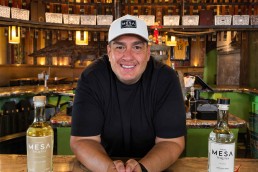
Familia Mesa Tequila founder Daniel Mesa discusses the brand’s approach to tequila production, the influence of Los Altos de Jalisco and its growing presence in the European on-trade.
How has Mesa evolved since it was founded?
Familia Mesa started as a personal discovery: one sip at a family wedding in Jalisco that changed everything. No burn, no after-burn, nothing artificial. I realised my family had been making tequila this way for generations at a distillery in Arandas, and almost nobody outside of Jalisco knew it existed.
From that moment, the evolution has been about earning the right to bring it to the world. I learned the entire production process myself, then built the brand from scratch: the identity, the bottle, the website and the trade relationships. In 2025 we made our first European debut at Athens Bar Show. In 2026 we attended Bar Convent London, won Silver and Bronze at Bartender Spirits Awards in our first year of entry, and we’re now preparing to exhibit at Bar Convent Berlin in October.
What makes the Los Altos de Jalisco region so important to Mesa?
Los Altos is everything. At 2,000m above sea level in red volcanic soil, blue Weber agave grows slower, matures more fully and develops a flavour complexity that lower-altitude agave simply doesn’t reach. We wait until the piña averages 38° Brix before harvest and that’s the moment the plant has given everything it has to offer.
But the region’s influence doesn’t stop at the agave. The distillery sits adjacent to a lemon orchard, and the wild yeast carried by bees from that orchard, along with the highland air, drives our fermentation. It’s a living, climate-dependent process you cannot replicate anywhere else.
What the Blanco gives you depends on the year. Most harvests show a bright citrus lift. Others from the same fields run cooler – peppermint, almost herbal – depending on when the piña was cut and what the red soil gave that season. The soft warmth in the Reposado Joven comes from the same place: the agave character that the land built, softened by oak. None of it is a decision made in the distillery, but our job is not to ruin it.
How do traditional production methods shape the character of the product?
The process is rooted in tradition, but what you hold in your hand is deliberately modern. That tension is the whole point of Familia Mesa.
On the production side: agave at six to seven years of maturity, verified at 38° Brix. Steam-cooked for 24-hours in traditional brick masonry ovens or ‘hornos’, then rested 12 hours before milling through a five-stage extraction. Fermentation begins with a small addition of baker’s yeast to start the process, but it is predominantly driven by wild yeast carried by bees and the highland air into open fermentation tanks. Natural, climate-dependent, and impossible to replicate in a laboratory. We distil twice through stills fitted with copper coils, the master distiller carefully separates heads, heart and tails. After distillation, the spirit rests three to eight days in stainless steel tanks through micro-oxygenation, then a final cellulose filtration before bottling.
And then you pick up the bottle and feel its clean lines, minimal label, embossed measurement markings pressed directly into the glass, and the result is unmistakably contemporary. The traditional craft and the modern design are two sides of the same intention.
What sets Mesa apart in an increasingly competitive tequila market?
I’ll be direct: I built this tequila for the European palate. I’ve spent years travelling and living in Europe, and what I kept noticing was that tequila had a reputation problem here that it didn’t deserve. People associated it with burning shots and the category had done itself a disservice.
The question I asked was: what would a tequila taste like if it were designed for someone who appreciates a good wine, a well-made gin or a natural spirit? Someone with a developed palate who isn’t interested in being impressed by heat? The answer is Familia Mesa. No burn. No after-burn. Zero additives, independently verified at every batch – and because CRT regulations prohibit us from making that claim on the bottle label, we publish the full production process and our NOM instead.
The idea is that you can grow with these bottles. You don’t need to already love tequila to love Mesa. Mesa is how you start, and somewhere along the way you realise your palate has gone somewhere more sophisticated without you forcing it.
How have you seen the way people drink and appreciate tequila change in recent years?
In Europe especially, the shift is real and structural. People are reading labels. They’re asking questions they weren’t asking five years ago. The same consumer who moved to natural wine because they wanted to know what was in the glass is now applying that same scrutiny to spirits.
What I find interesting is that it’s not just about health or ingredients, it’s about palate development. European drinkers want to understand what they’re tasting. They want to be able to articulate why something is good, not just feel that it is. That’s a significant opening for a brand like Mesa, because we have genuine answers: the terroir, the wild fermentation, the process and the NOM.
What opportunities do you see for tequila within the wider on-trade?
The category is still growing, and Europe is significantly underpenetrated compared to North America and the UK. The on-trade opportunity is enormous, particularly for brands that can offer genuine provenance and transparency, not just premium packaging.
The biggest opening is in cocktail-led venues and fine dining that already champion natural wines and craft spirits. Those buyers understand what additive-free means. They know how to communicate it to their guests. We’re also finding that bartenders actively seek out spirits they can talk about with confidence. Mesa gives them a story that happens to be true.
What’s next for Mesa Tequila?
Bar Convent Berlin in October is the immediate focus. That’s followed by Athens Bar Show in November, our second year there, building on relationships established in 2025. Between those two events, we’re looking to convert conversations into signed on-trade accounts across Germany, Scandinavia and Greece.
On the competition side, we’ve entered three awards for 2027: the Global Drinks Awards, the London Spirits Competition, and we’re returning to the Bartender Spirits Awards after winning Silver and Bronze in our first year. Independent recognition matters when introducing yourself to a new market because it gives buyers a reference point before they’ve tried the bottle.
Spain, Italy, and France are on the roadmap from 2027 onward. But we’re not rushing. Each market takes time to do properly, and we’d rather do three markets well than six markets badly.
Is there else anything in the pipeline you can share with us?
Alongside Bar Convent Berlin and Athens Bar Show, we’ll be at Salon Gourmets in Madrid and Wine Paris: two of the most important premium food and drink trade platforms in Europe. Those audiences understand provenance, terroir, and the difference between something made properly and something made to a price point. That’s exactly where Familia Mesa belongs.
We’re also actively exploring partnerships with female athletes and women’s sport across Europe, starting in the markets we’re already building: Greece, the Netherlands, Denmark and Sweden. That’s not a calculated pivot. It comes from somewhere personal. This brand was dedicated to my grandmother María and my godmother Luz María, who both shaped me long before I knew I’d be doing this. I was raised by a single mother, and I’m now doing this as a father to a daughter. The women in my life built my sense of what quality, care and doing things properly actually means.
We’re a two-expression brand built for the long term. What comes next will be announced when it meets the same standard. We’re not rushing.