Interview: Rudy Saderi on traditional Tuscan cuisine at Il Salviatino
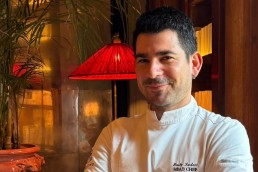
Rudy Saderi is Head Chef at Da Giacomo al Salviatino within Il Salviatino Firenze, a dining destination which brings the renowned Milanese concept to the hills of Florence.
The menu is a testament to authentic Italian tradition – with a special emphasis on fresh seafood – while guests can expect established recipes prepared with seasonal ingredients from the estate’s permaculture garden.
In our interview, Saderi discusses his culinary journey from Sardinia to Florence, his approach to traditional Tuscan cooking and the importance of allowing quality ingredients to shine.
When did you first fall in love with cooking?
Growing up in Sardinia, I learned my craft before I realised that cooking was what I wanted to pursue as a career. I worked in a variety of restaurants, both well-known and lesser-known, before travelling to Switzerland and France to further immerse myself in the world of cooking. These experiences helped shape my approach and gave me a real appreciation for different culinary traditions.
How would you describe your culinary style?
My culinary style is very traditional and Tuscan. At Il Salviatino, the cuisine is strongly rooted in the quality of the ingredients, simplicity and tradition. I believe that when you start with exceptional ingredients, you don’t need to overcomplicate things, you should allow the natural flavours to speak for themselves. I like when a cuisine is highly recognisable and the ingredients are in the centre. Often the hardest part is simplifying, finding the equilibrium and leaving the main role to the ingredients.
What is your culinary vision for the menu at Da Giacomo al Salviatino?
Da Giacomo al Salviatino is born from the fusion of a very precise Italian gastronomical identity and an extraordinary place called Firenze. My vision is to incorporate my respect for this identity while giving value to the territory and the seasonality. I like to put my personal experience on each plate without forcing creativity. To propose dishes which are easy to understand, elegant and uncomplicated, finding the balance between tradition, simplicity and creativity.
Do you have a favourite dish on the menu?
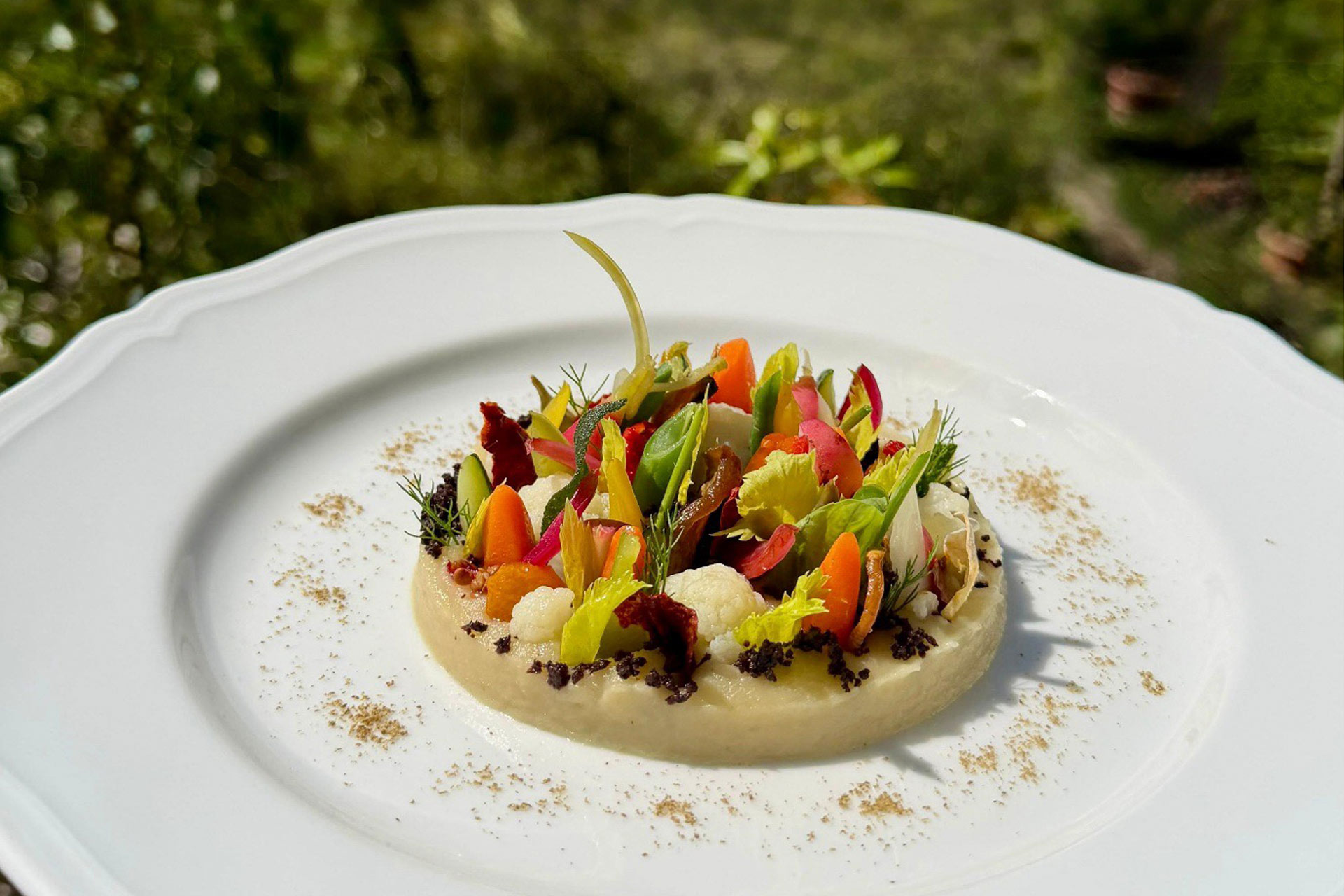
My favourite dish is the Quadro di verdura. It is a full vegetarian dish which follows seasonality. Each ingredient is prepared and cooked separately, better preserving its characteristics, consistencies and flavours. Even though it may look simple, the preparation of this dish requires a lot of attention and precision. Inside one finds consistencies, acidity, different flavours, always maintaining an equilibrium and most importantly always keeping every single ingredient recognisable.
This dish perfectly embodies my approach to cooking: starting with the raw ingredients, respecting them, and using technique to enhance them without unnecessary alteration. The fact that it is an entirely plant-based dish also demonstrates that a vegan offering can possess the same complexity and stature as any other dish on the menu.
What is the most important lesson you’ve learned during your career?
To never stop learning. Every kitchen, chef and destination has something new to teach you. Working in different countries and with different culinary traditions has taught me to remain curious and open-minded, while always staying true to the foundations of Italian cooking.
Over the years, however, I’ve also realised something else: being a chef isn’t just about knowing how to cook. It’s about organisation, decision-making, managing people, instilling a working method and taking responsibility for the final result.
What are the biggest challenges faced by the hospitality sector at the moment, and how are you tackling them?
The rising cost of raw ingredients. This forces us to work smarter: carefully selecting products, controlling waste, organising purchasing and utilising raw materials as fully as possible. At Il Salviatino, we pride ourselves on using locally sourced ingredients, and we try to use as much as we can from the gardens on the property. This allows us to work with seasonal produce at its best, while reducing waste and maintaining the quality and connection to the land that are so important to our cuisine.
Which chefs have inspired you?
My professional growth has stemmed primarily from the experiences I’ve had, the kitchens I’ve worked in and the people I’ve met along the way. I’ve tried to take something from each of them: a working method, a technique, a way of organising the kitchen, or simply a different perspective. I believe my identity as a chef was forged in precisely this way, through many small lessons and constant exchange, rather than by following a single model.
What is your approach to sustainability in your cooking?
For me, sustainability starts with the ingredients, using local and seasonal produce wherever possible, making the most of what is available and avoiding unnecessary waste. At Il Salviatino, we are fortunate to have our own gardens, which allow us to use fresh produce from the property and create a closer connection between the kitchen and the land. I believe that today, sustainability should not be merely something to talk about, but a way of organising and approaching the kitchen on a daily basis.
What would you like your next project to be?
My current priority is to continue growing the work we are doing at Il Salviatino, and to develop my identity as a chef. My role has evolved significantly over the years: while the creative aspect of the kitchen remains fundamental, it is now accompanied by the need to manage the brigade, handle organisation and oversight, and coordinate various operations and services. Therefore, I would like my next project to be, above all, a further evolution of this journey, continuing to grow both gastronomically and managerially, while building a kitchen with a truly distinctive identity and a team capable of sharing that same vision.
What is your favourite dish, and who cooks it?
There are certainly flavours and preparations I associate with my family, with Sardinia, and with various moments in my life, but I couldn’t single out just one as my favourite. Perhaps because of my profession, my relationship with food has evolved significantly over time. Today, I can be just as moved by an extremely simple dish as I am by a more complex preparation. For me, it isn’t necessarily the dish itself that makes the difference, but the moment, the people I share it with and the memory it leaves behind.