
Frank Acosta reveals the aims and inspirations behind Acosta Tequila
On a mission to honour his Mexican heritage, Frank Acosta created Acosta Tequila, a premium range of añejo tequilas renowned for their smooth, creamy mouthfeel. Here, the entrepreneur discusses the inspirations behind the brand, his goals for transforming the guest drinking experience, and why he personally oversees every aspect of the drink’s creation, from designing the bottle to hand selecting the barrels the spirit is aged in.
What’s the story behind the brand — how and why did it all begin?
Acosta really begins with my grandparents. They came from Mexico and spoke only Spanish their entire lives, so I grew up wanting to find a way to connect with that heritage and to honour it, rather than just carry it quietly. That’s where the real story starts. When I looked at the tequila industry, what struck me was how little Hispanic representation there was. Here you have a spirit that is the very soul of Mexico — one of the most culturally rich countries in the world — and almost no Mexican representation inside it. That never sat right with me. I felt a real responsibility to earn the respect of this industry and to be an honest representation of the craft of tequila and the culture of Mexico.
Everything we’ve built since comes from that. From there, Acosta became bigger than a product. I wanted it to be a brand that stands for pride, confidence and self-worth, and that’s really what ‘Own the Night’ means. It’s not about being loud or excessive, it’s about being ready, grounded, and walking into any room with the kind of presence that says you belong there.
How did your existing experience in the food and drink industry support the move?
I’ve been in food and beverage for over 20 years. I founded Manhattan Milk and The Farmers Butler, both of which I still run today, and what those years gave me more than anything was an understanding that connecting with people is everything. I genuinely believe it’s a dying art. We live in a world of AI, scrolling, bots, machines — the human touch has been lost. I’m not built that way. Working in New York, Miami and Las Vegas, some of the most competitive hospitality markets in the world, I learned fast that you have to be in the room. You have to show up. If a conversation could’ve been done on Zoom, I got on a plane instead, because that’s how you earn trust.
That’s exactly what I did in Mexico, and it’s what I do every time I come to Europe to source our cognac barrels. That same philosophy is how we’re approaching London. I’m not here to drop bottles and disappear — I’m here, I’m available. Because at the end of the day, this only works if the people surrounding this brand believe in what’s in the bottle. I’ve known that for a long time.
So what sets it apart from other tequilas?
One of the biggest things is the way we age our tequila. Most of our expressions are matured in French cognac barrels, and I fly to Cognac myself to choose them. There are things you can only understand by being there: the cellar conditions, the humidity, how each barrel has aged through its years of cognac, what character and flavour it still has left to give. By the time those barrels arrive in Mexico, I know exactly what I have, where every one of them is, and what condition they’re in. That level of control matters, and most people in this industry don’t operate that way. Genuine ex-cognac barrels are expensive and they take time to source properly. The honest truth is that they aren’t required to bring an aged tequila to market, but we made the investment anyway, and it’s a big part of why Acosta tastes the way it does. The essence of almond and cinnamon, and the warmth you taste in this bottle, all comes from real wood and real time, not from additives. That’s also why our tequila is built to be drunk neat or on the rocks, and why you don’t get a hangover.
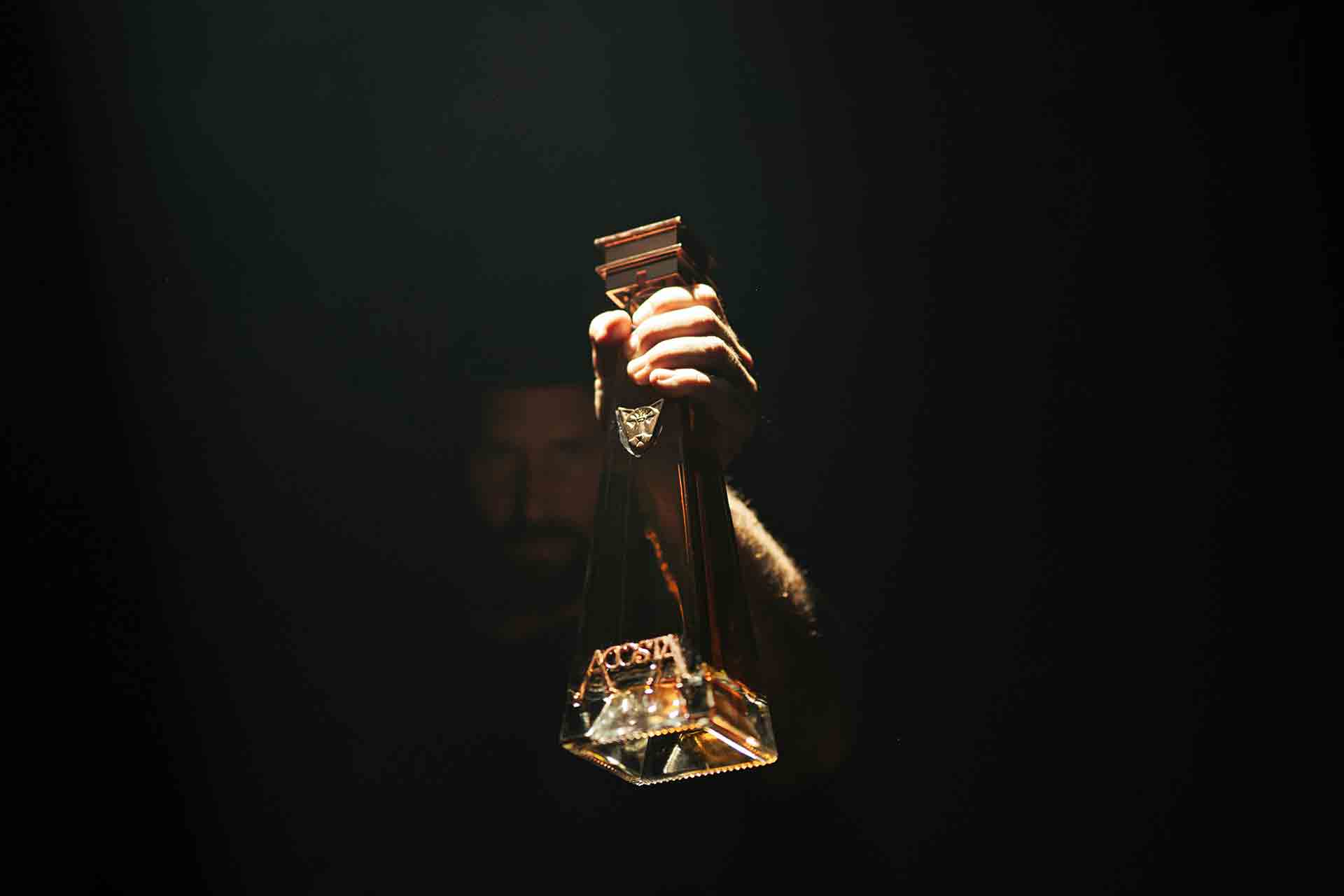
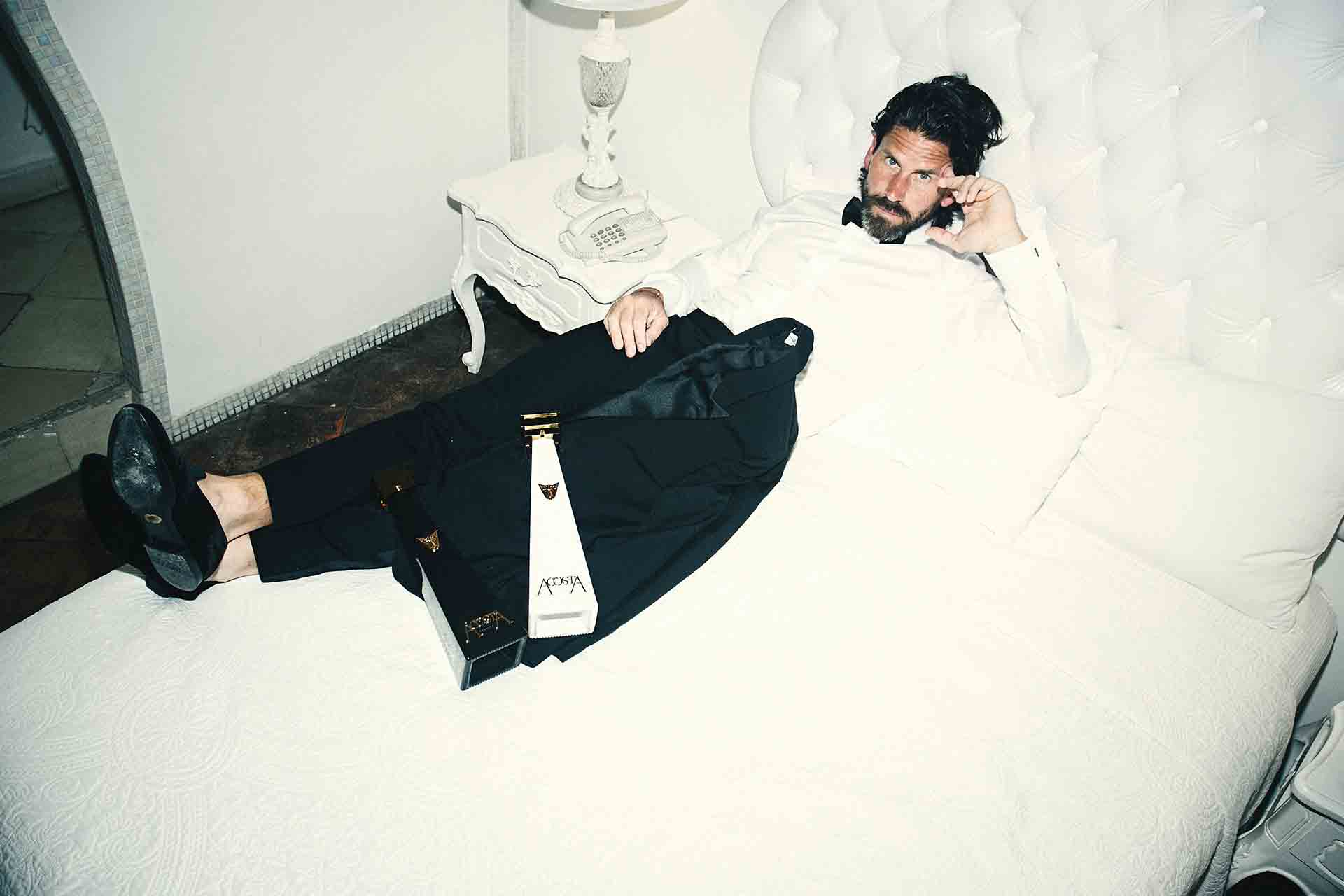
Everything we do, from the slow cook, the cognac barrels, the time in wood and the purity of the spirit, is designed to let the tequila speak for itself. The bottle is the other half of the story, and you can feel the quality in the weight of it. It took me over a year to design, and I first drew it on a napkin. The pyramid silhouette is a tribute to Mesoamerican temples, and both the bottle and the cap are patented. It’s meant to sit on the back bar with the kind of presence you’d find in a piece of jewellery or a fine bottle of perfume. It’s artful on both the inside and outside.
What values underpin the brand?
Heritage, first. I’m Mexican and Acosta was always about giving something back to Mexico and Mesoamerica – to a culture that deserves to be represented properly in a category that carries its name. Then there’s Own the Night, and I want to be specific about what that means, because it’s about being fearless and confident in who you are. It’s for the person who has earned the room they’re walking into – that’s every Acosta client, and that’s exactly the guest London’s best venues are serving.
The jaguar at the front of this bottle sits there for a reason. It’s my favourite animal and it represents the strength and heritage of a culture we’re committed to protecting. That cause is completely central to who we are. What also matters deeply to me is that I don’t have to compromise the product to hit a quarterly number. I believe if you move with your heart, people see it, and we’re getting real momentum from that now, including here in Europe.
Talk us through the maturation process.
I won’t give away all my secrets, but I’ll share the parts of the process I’m most proud of. Blue Weber agave takes anywhere from six to 12 years to mature, and we harvest at the peak window of about eight to 10 years, when the plant has fully developed its sugars and complexity. Cutting agave early to hit volume is one of the easiest ways to compromise a tequila, so we don’t do it. The plant is ready when the plant is ready. Once the piñas come in, we slow-cook them in traditional stone ovens, what we call hornos, for 42 hours. That’s considerably longer than other producers, and that time is what breaks down the agave’s natural sugars and develops the character, sweetness, depth and warmth, before the liquid ever touches a barrel. From there, we move into a slow, controlled fermentation, and what comes off the still is already something remarkable before it ever sees wood. Then there’s the ageing. The Joven rests for one month in cognac barrels, and the Reposado for nine months, while the Añejo eighteen and the Extra Añejo sit in American oak for 36 months. There are no added sugars and that purity is everything. When you drink Acosta, you’re tasting the plant, the oven, the copper, the wood, and the time. Nothing else.
What are the unique characteristics of Acosta Tequila?
I’ll put it simply: if you’re drinking Acosta neat and it’s the only thing in your glass, the morning is going to feel completely different. There’s no added sugar and no additives, so it’s a pure product. Wellness isn’t just a trend anymore, it’s how people are choosing to live, and the spirits category has to evolve with that. Acosta already has. The other thing I want people to understand, and I use this analogy a lot, is that saying you want a Reposado is like walking into a car dealership and saying you want a sedan. Is it a Toyota? Is it a Porsche? Not all Reposados are built the same. There are variables, so education is a big part of what I’m here to do in this market. We have four expressions, Joven, Reposado, Añejo and Extra Añejo, and I launched with the Añejo because I wanted to establish from day one that this is a luxury brand. I got feedback that it was too expensive. My answer was simple: that’s who we are. London understands that. The venues we want to be in understand that.
What do we need to know about Acosta Tequila Lux?
Lux is our Extra Añejo, and it’s the most personal expression in the range, the statement piece of the house. We only produced 300 bottles. It sits in American oak for 36 months, the legal minimum for the Extra Añejo classification, and what that wood gives back is different from the rest of the range. Think of it as a luxury sipping experience, the same way you’d approach a great Scotch or a fine cigar after a long dinner — rich, warming, with natural notes of nutmeg, dark chocolate and smooth vanilla. Again, no added sugars. Just time, wood, and the quality of what we put in to begin with. The bottle itself is the clear version of our pyramid silhouette, so you can really see the quality of the glass, the lines, the craftsmanship and the weight of it in your hand. Someone once told me holding it felt like holding a Grammy. I’ll take that. For the right venue – the kind of place where someone looks across the room and asks what that is – Lux is the answer.
How does Acosta contribute to a positive guest experience?
I want Acosta to feel like a real part of the night, or the experience as a whole. For me, it starts with connection. When you’re in the right room and someone orders the tequila, that moment can turn into a conversation, an interesting moment, or another table wanting to get involved. That’s the kind of energy Acosta brings. The UK market is moving fast toward premium, and guests here are already health-conscious, already quality-driven, already looking for something with real substance behind it. Acosta is that. Own the Night. That’s it. Let the bottle do what it does. Give your guests something in their hand they’re proud to be holding. That’s the experience.
Find out more at www.acostatequila.com