Interview: Richard Simms on his culinary vision for Ellenborough Park
Chef Richard Simms has been at the heart of the kitchen at Ellenborough Park for nearly seven years, overseeing its dining offering with a focus on British produce and seasonal cooking.
Set within 90 acres of Cotswold countryside at the foot of Cleeve Hill, the estate provides a natural setting for Simms’ ingredient-led approach. He is now looking to strengthen that connection further, bringing more produce from the property’s gardens into the kitchen while continuing to work with trusted British suppliers.
In our interview, Simms discusses his culinary style, the influence of early mentors and the challenges of building the next generation of chefs.
When did you first fall in love with cooking?
I first became interested in cooking when I was 16, during a college visit, when I discovered the catering department. It immediately made me want to explore cooking as a career.
I left Lancashire at 19, after three years at catering college, which led me to 36 On The Quay, a Michelin-starred restaurant near Portsmouth. I was fortunate to receive some fantastic training and mentorship there, and that was really where my passion for cooking developed. I was working at a level I had never experienced before, surrounded by people who were pushing me to learn, improve and take pride in what I was doing.
How would you describe your culinary style?
I’d describe my cooking as seasonal, ingredient-led and rooted in British produce. I like to respect the ingredients I’m working with and let their natural flavours speak for themselves, rather than overcomplicating a dish. I enjoy using traditional techniques, particularly when it comes to sauces, but I also like bringing creativity into the kitchen and finding new ways of presenting familiar ingredients.
What is your culinary vision for the menu at Ellenborough Park?
My vision is to create food that reflects Ellenborough Park and its surroundings, while making the most of the fantastic seasonal produce available to us in the Cotswolds. I want the menus to feel creative and contemporary but still grounded in good British ingredients and proper cooking.
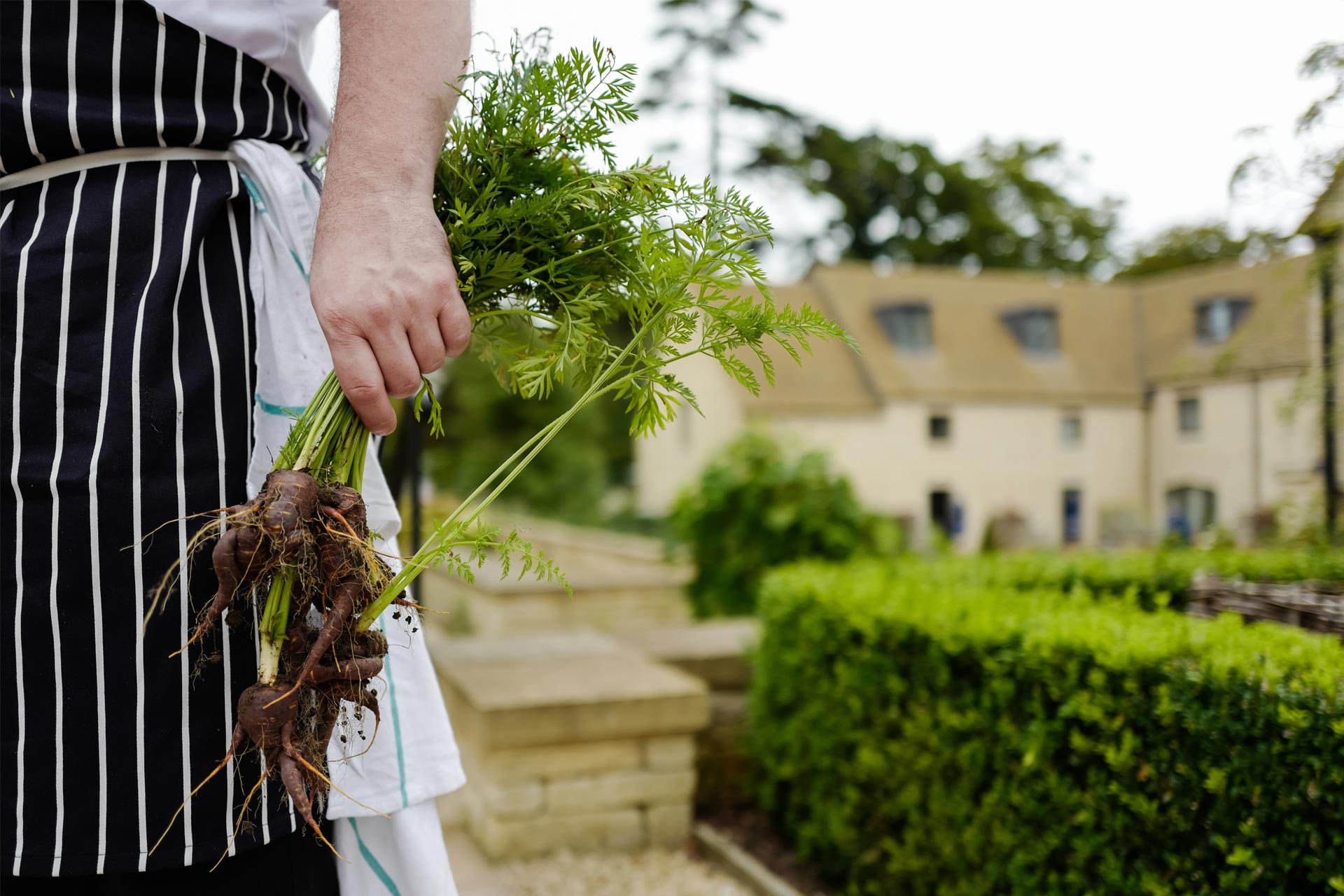
I’m particularly excited about developing our kitchen garden and bringing more of what we grow here into the kitchen. Whether it’s homegrown tomatoes, herbs or more unusual garnishes, there’s something special about taking an ingredient from the garden and putting it straight onto the plate.
Ultimately, I want the food at Ellenborough Park to feel connected to the place and give our guests a real sense of where they are.
Do you have a favourite dish on the menu?
My favourite dish at the moment is our lobster and scallop ravioli. We’re fortunate to get hold of some amazing fresh lobsters, and we use the meat to make the ravioli filling. We then keep waste to a minimum by using the shells to make a rich bisque sauce to serve alongside it.
It brings together the kind of cooking I enjoy most – great ingredients, considered techniques and flavours that work together without trying to do too much. There’s also something very satisfying about taking one ingredient and making the most of every part of it.
What is the most important lesson you’ve learned during your career?
I think one of the most important lessons is to learn from your mistakes. When I look back over my years in the kitchen, it’s often the times when something didn’t turn out as it should, or simply didn’t taste right, that I remember most.
When I find myself making the same recipe again or working with the same ingredients, I’ll often have a quick flashback to what went wrong before and what I learned from it. Those experiences stay with you and help you understand how to achieve the result you’re looking for.
I’ve also learned that a successful kitchen is very much about the team. You can have all the ideas in the world, but it’s the people around you who bring those ideas to life and make sure the standards remain high every day. A kitchen team is much like a family – everyone needs to get on well, support each other and understand the end goal.
The biggest piece of advice I was given at the beginning of my kitchen journey was that it might take you a hundred times to get something right. But once you’ve mastered a skill or technique and proven that you can do it, you need the self-discipline to work to that standard every time.
What are the biggest challenges faced by the hospitality sector at the moment, and how are you tackling them?
In my eyes, one of the biggest challenges facing the hospitality sector, particularly from a kitchen perspective, is finding the young, passionate chefs who will become the next generation.
We’ve had some great success over the last few years in finding some fantastic additions to our team. For me, it’s about creating an environment that is efficient from a cooking point of view, but also somewhere chefs can learn every day, develop their skills and stay engaged with the journey we’re on.
I think if you can create a kitchen where people feel they’re learning, progressing and being given opportunities, you have a much better chance of developing and retaining good chefs for the future.
Which chefs have inspired you?
Neil Cruickshanks was my chef tutor at catering college. Around 20 years ago, the food and restaurant scene in Lancashire was nowhere near what it is today. His advice to me was simple: if you’re eager to learn, find a kitchen that can teach you the skills you need, regardless of where it is. That’s the reason I moved to the other end of the country, not knowing anybody, but simply wanting to learn and improve my skills.
That decision led me to 36 On The Quay, where I worked under a great chef and mentor, Ramon Farthing. He taught and guided me, was critical when I needed it and pushed me to succeed. Both of them had a huge influence on the chef I’ve become and on the way I approach cooking and leading a kitchen today.
What is your approach to sustainability in your cooking?
I think sustainability starts with making good choices about the ingredients we use. I prefer to work with trusted British suppliers and make the most of seasonal produce, using ingredients when they’re at their best and reducing unnecessary waste.
The kitchen garden is also an exciting part of that. I’m keen to bring more of what we grow at Ellenborough Park into the menus, whether that’s tomatoes, herbs or garnishes. There’s a real sense of purpose in growing something here and then using it in the kitchen.
We also look closely at how we use ingredients across the kitchen, making sure that as little as possible goes to waste. For me, sustainability isn’t about one particular initiative; it’s about being more considered in the way we cook and operate every day.
What would you like your next project to be?
We’re about to relaunch our tasting menu, which the whole kitchen team is really excited about. It gives us a different creative outlet and the opportunity to develop and cook some great new dishes.
I’m always looking for ways to keep things fresh and creative, so ultimately my next project would be something that challenges the team, gives us the opportunity to work with exciting seasonal ingredients and, most importantly, gives our guests something new to enjoy.
What is your favourite dish, and who cooks it?
There is a gingerbread parkin recipe in my family that is well over a hundred years old. It brings back memories of being a child and visiting my grandparents’ house, where one of the first things I would do was raid the cake cupboard to find it.
It’s a recipe and tradition that I’ve continued, and I still bake it regularly myself. It has even appeared on our menus here at Ellenborough Park a few times over the years.
For me, it’s more than just a favourite dish. It’s a connection to my family and childhood, and a reminder that sometimes the simplest recipes can hold the most meaning.