Interview: Mirko Maurello on storytelling behind the bar at Giacosa
Founded in Turin in 1815, Giacosa arrived in Florence in 1860, quickly becoming a landmark bar for the city’s elite. It was there, in 1919, that a simple request changed the course of cocktail history when Count Cammillo Negroni asked bartender Fosco Scarselli to add a measure of gin to his Americano, giving birth to the Negroni.
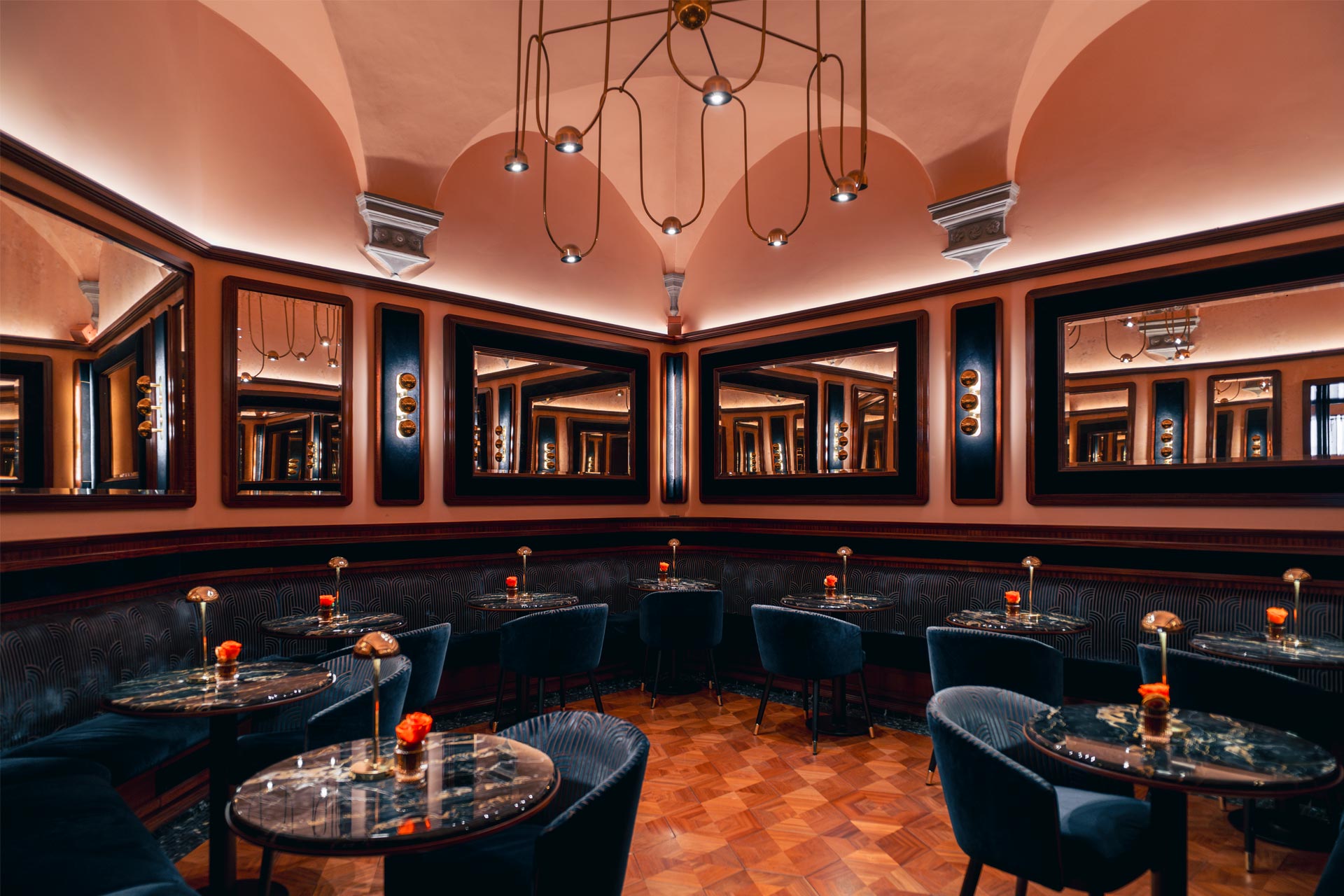
Today, just steps from its original location, Giacosa begins a new chapter, honouring its storied past while introducing a contemporary interpretation of its legendary cocktail heritage. In our interview, Bar Manager Mirko Maurello talks about the philosophy behind the bar and its latest drinks programme.
When did you first fall in love with the industry?
I fell in love with the bar world when I was very young. At that time, going to a bar with my family or friends was part of everyday life. We would stop for a cappuccino and a pastry, often in places so crowded that it was hard to move. Behind the counter, the baristas moved with confidence, serving people with different requests, while smiling, chatting and preparing everything at the same time.
I was fascinated by that rhythm: the sound of coffee cups and saucers, the steam from the cappuccino machine, the voices of people waiting at the counter. Somehow, all of it caught my attention. My heart would beat faster, as if something in that world was calling me.
Years later, when I entered the hospitality industry and attended my first cocktail course, I discovered a world I knew very little about. But one thing was clear: making cocktails was what I wanted to do.
How would you describe your style behind the bar?
My style behind the bar is the result of all my personal and professional experiences. I often think of it as a Caesar salad: different ingredients, each with its own character, brought together to create balance.
I began my professional journey in five-star hotels, where I learned discipline, standards and the importance of precise service. But the place that truly shaped me was London. There is no time to stand still or overthink your mistakes; you learn, you move on and you stay ready. It teaches you to be present in every moment, even when nothing seems to be happening.
Today, my way of working behind the bar combines the structure of five-star hospitality with a touch of street freedom. It is a balance between discipline and instinct, always focused on the final goal: giving the guest the best possible experience.
What is your creative vision for the menu at Giacosa?
For me, a menu is a way to express ourselves without too many rules or external influences, something that comes from the gut. At Giacosa, we approach the signature menu in this way, but I also believe a menu should tell the guest something.
Chefs often speak about the land they are inspired by; ingredients, textures and techniques. Cocktails are different because they are liquid. Of course, technique can add depth, emotion and complexity, but the main texture remains fluid.
That is why, when we choose a concept, we want it to communicate a story. The drinks become a way to introduce people to a theme, a place or a piece of culture. One of our first menus followed this idea. It was inspired by Italian neighborhood bars – simple places, full of history, where generations have met, talked and shared everyday life. The goal was to use drinks as a door into that world.
Do you have a signature or favourite drink on the menu? What makes it special?
Ciampanelle. The cocktail is meaningful for the combination of ingredients and the personal story behind it.
I created it as a tribute to my grandmother. Our current signature menu is inspired by Florentine popular slang, and Ciampanelle is a word my grandparents used often. It describes a state of confusion, when someone feels a little lost or disoriented.
The drink plays with that idea through unexpected flavors: ricotta, ylang-ylang, alchermes and cauliflower. They are very different ingredients, almost contradictory, and that contrast can confuse the palate at first. But there is also a very intimate connection. Ricotta with alchermes, a traditional Florentine liqueur, is something I grew up with. My grandmother still serves it to me at the end of a meal, and every bite takes me back to my childhood.
What is the most important lesson you’ve learned during your career in hospitality?
The most important lesson I learned in London was that talent is not enough.
Being a bartender is not only about technique, speed or pouring drinks. Knowledge comes first. I still remember that period as one of the hardest of my life, but also one of the most meaningful. I started buying books, studying constantly and taking the job more seriously than ever before. That demanding environment shaped me, making me the person and professional I am today.
What are the biggest challenges facing the bar and hospitality sector right now, and how are you navigating them?
In my opinion, one of the biggest challenges is that guest preferences have changed.
During Covid, many people started making drinks at home. They became more curious, more informed and more connected to the cocktail world, so it is not enough to simply serve a good drink. People want to experience something and feel that there is a story behind what they are drinking.
For bartenders, this is both a challenge and an opportunity. It pushes us to study more, to be more creative and to give guests something that goes beyond the glass.
Which bartenders, bars or drinks cultures have inspired you most?
Luca Cinalli and Marian Beke inspired me through their movement behind the bar. I still remember watching videos of them studying every gesture, every detail, every movement involved in crafting a drink. There was precision, rhythm and intention in everything they did.
Agostino Perrone fascinated me for his charm, his elegance and the way he approaches people. I was impressed by his ability to host guests, to read the room and to make hospitality feel natural.
Filippo Sisti had a major impact on my creative side. I once attended an eight-hour class with him in Milan, almost missing the train from Florence to be there. After that class, I did not want to remain only a classic bartender. I wanted to move towards creativity, research and concept development.
What is your approach to sustainability and responsibility behind the bar?
I have always tried to waste as little as possible behind the bar. For me, sustainability starts with simple choices: working with seasonal products, using ingredients at their best moment and finding intelligent ways to replace or support them when they are not available.
When fresh products are not the right option, essential oils or other concentrated elements can help us recreate a flavour in a more controlled and responsible way.
We also use several preservation techniques to extend the life of ingredients. This allows us not only to reduce waste, but also to give elements a second life, sometimes discovering new flavours and new possibilities in the process.
What would you like your next project or chapter to be?
I have many dreams, but there is one I would really like to achieve: to become Creative Director of a company with bars around the world. I would love to travel, train teams, guide new bar projects and create drinks that can give each place its own identity.
What is your favourite drink and who makes it best?
My favourite drink is a frosty shaken Dirty Martini, made with London Dry gin and a small touch of navy-strength gin.
In Florence, Sacha Mecocci makes one of the best Martinis I have ever had. Whenever I go to his place, I always hope he is the one preparing the drink.