Interview: Tom Heywood on foraging and low-waste cooking at Pignut & The Hare
Yorkshire restaurant-with-rooms Pignut & The Hare has become something of a destination for seasonal cooking. Created by husband-and-wife duo, chef Tom Heywood and front-of-house specialist Laurissa Cook, the property is dedicated to creating experiences shaped by close collaboration with local farmers.
A celebration of both land and sea, regularly changing menus showcase produce sourced from the surrounding area, including Helmsley Walled Garden and the Castle Howard estate. With early spring underway, the kitchen is enriched by ingredients foraged daily by Heywood and Cook. Highlights currently include Castle Howard lamb rib with mint, barbecued lion’s mane mushroom and cured chalk stream trout with Newfields beetroot.
Never ones to stand still, the pair have also published their first cookbook, The Forager’s Table, in partnership with Meze Publishing. A celebration of the seasons, the book explores the dishes and philosophy behind Pignut & The Hare, paying homage to the hills and hedgerows of Helmsley.
In our interview, we talk to Heywood about his early memories of cooking, and the philosophy behind his deceptively simple dishes.
When did you first fall in love with cooking?
I think it happened twice. Once, when I was very young, around four or five, we would pick blackberries, go to my Nan’s house, and make blackberry apple pie for my parents and butterfly buns for my brothers. That’s when I first saw the magic of mixing raw ingredients to create something delicious. The other was when I first started working in kitchens at the age of 15 at the local pub, The White Horse. I first saw how a service felt and the rush you get cooking and creating food that people would eat. After my first day, I realised how happy being in that environment made me.
How would you describe your culinary style?
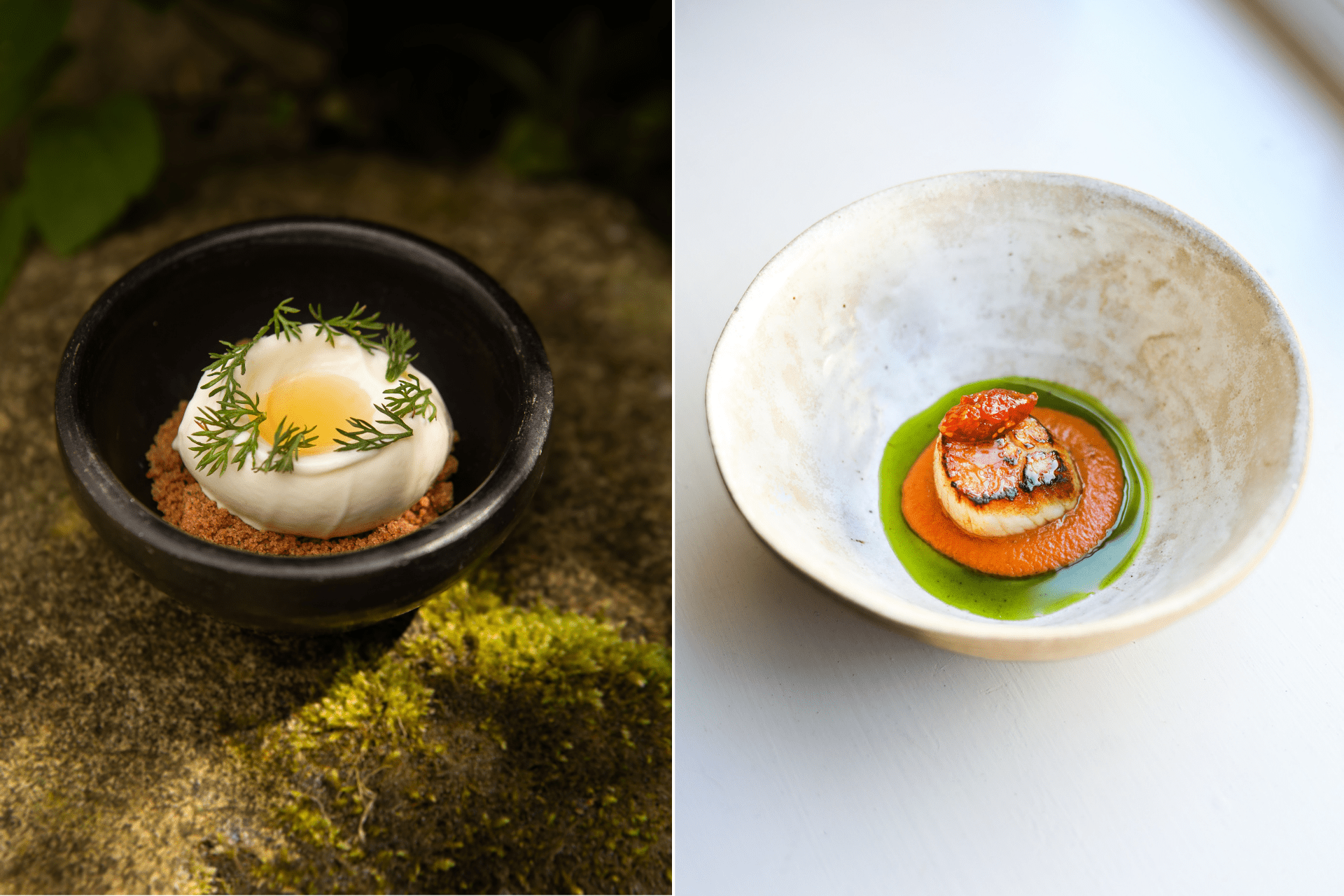
My style is visually simplistic, but we put a lot of thought into the cooking, the ingredients and the sourcing of the food. So, the dishes are simple, but they feature the best seasonal ingredients available at that time. What is your culinary vision for the menu at Pignut and The Hare? We want to offer a variety of ingredients, showcasing our suppliers, who are mainly all small producers. The menu is balanced with fish, meat and vegetables, but we incorporate a lot of foraging this time of year.
Do you have a favourite dish on the menu?
Currently, the pork dish is my favourite because Castle Howard has spent the last couple of years creating a truly organic woodland pork. Thepigs stay with their mothers for as long as they want before they naturally leave to forage for their own food and are allowed to grow much longer than other pork. The flavour is incredible, and I love the ethos behind it. It’s everything we believe in here.
What is the most important lesson you’ve learned during your career?
I think the more important lesson is to simplify everything. You don’t need to show as many skills as possible on each dish; it just complicates the taste and the vision of the dish you’re trying to create.
What are the biggest challenges faced by the hospitality sector at the moment, and how are you tackling them?
I think the obvious issue is the huge rise in the cost of food and overall living expenses. We are tackling this by ensuring that, no matter what, we offer everyone who comes into the restaurant our best food and service. We know not everyone can afford to eat out every week, so we just want to make sure whoever chooses us feels it’s worth every penny and returns in the future when, hopefully, the economy bounces back and people are more able to dine out.
Which chefs have inspired you?
Growing up, it was always Gordon and Marco, but a few years ago, I ate at Blue Hill at Stone Barns in New York, and the food blew me away. It literally changed my view on food and how every ingredient is completely individual and how many factors can change its quality and taste. It was truly an eye-opener regarding how important it is to choose the right ingredients from the right suppliers who grow or raise livestock the correct way.
What is your approach to sustainability in your cooking?
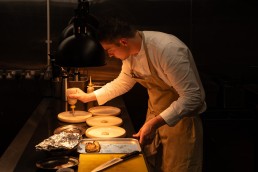
Firstly, we focus on cooking food within the season, sourcing locally and ensuring we don’t waste anything. That’s why our first course is called Wastage, which uses any off-cuts or ingredients that are usually wasted to create the snacks. We also forage extensively, always on foot, gathering only what is near the restaurant. We’ve recently started planting and growing our own vegetables and herbs on the land behind the restaurant.
What would you like your next project to be?
I think the kitchen garden has only just started, and it’s a big project. We want to be able to do many rotation crops and show people how we can maximise a small space into something that can produce amazing ingredients. In the kitchen garden, we would eventually love to be able to take customers out there for a course or two among the growing vegetables.
What is your favourite dish, and who cooks it?
In March, I ate at Atelier Moessmer in Italy, where Norbert Niederkofler serves an Arctic char tartar with crispy fish scales, foraged preserved berries and herbs, and a warm fish sauce made from all the trim and bones. It was perfect in every way.