Interview: Zakia Rabbaa on preserving Morocco’s rich food heritage at Dar al Dall
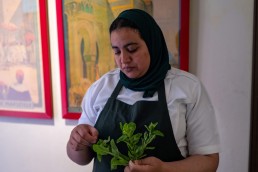
Zakia Rabbaa is Head Chef at This Time Tomorrow’s Riad Dar al Dall in Marrakech, a five-key riad hotel in the heart of the city where she celebrates the depth and diversity of Moroccan gastronomy.
With more than two decades of experience across the city’s hospitality and restaurant scene, including key roles at Amanjena and Moroccan Kitchen at Palais Dar Ghizlane, Rabbaa oversees the entire culinary offering at Dar al Dall, where guests can enjoy her cooking on the riad’s rooftop restaurant or in its intimate private dining room.
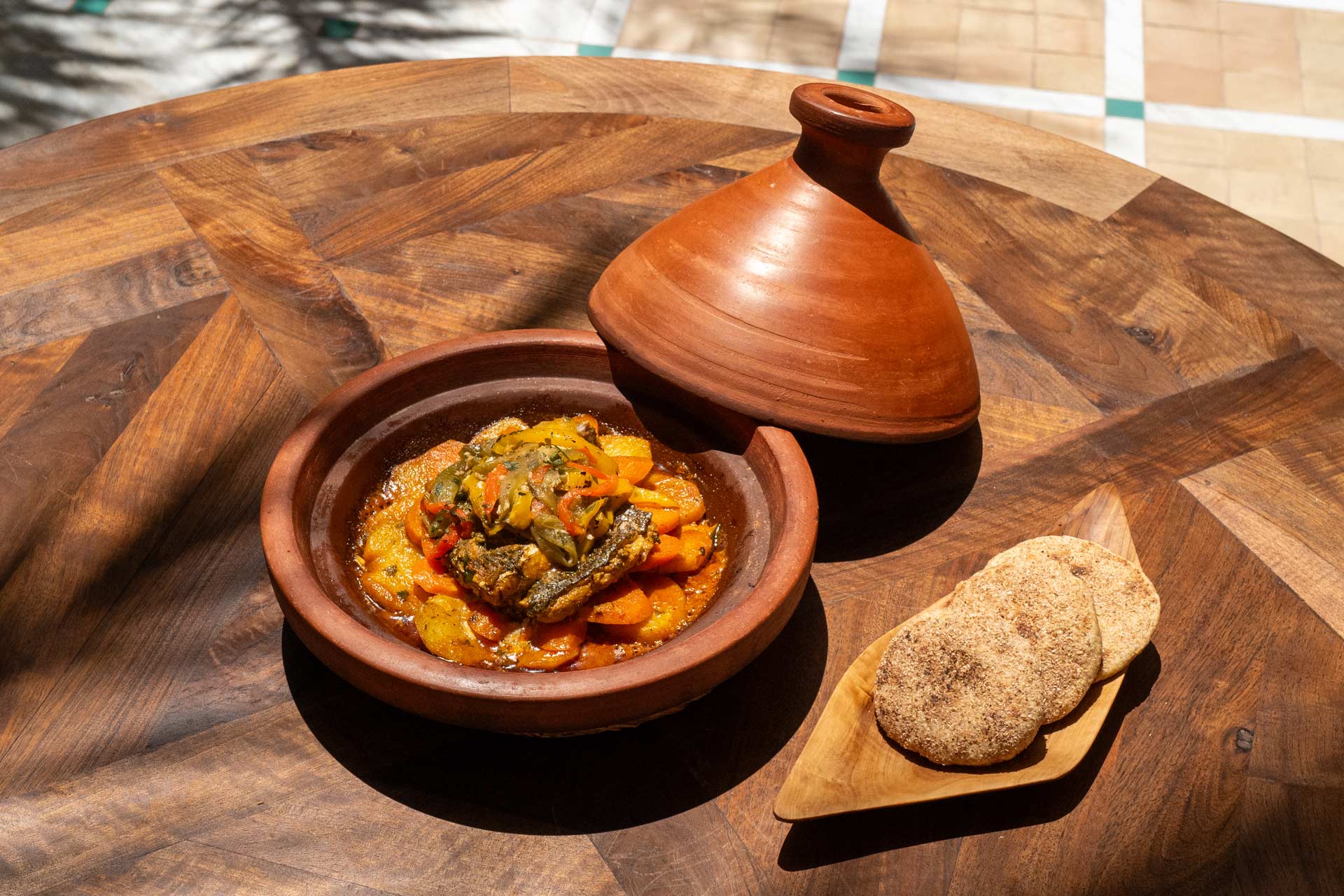
Signature dishes include Kefta dyal Espadon, or swordfish tagine with tomato; Kuku Sibzamini, a combination of potato, lamb and pine nuts; and Seffa with chicken, steamed vermicelli and almonds. Desserts available include Gâteau à l’Orange made with oranges and olive oil, and Gâteau au Fromage paired with Manchego and strawberry coulis.
While her expertise extends to international cuisines, including Thai cooking, Rabbaa’s true passion lies in celebrating local food traditions. Known for her exceptional understanding of spices, seasoning and heritage techniques, she creates dishes that are both authentic and refined. Her Moroccan salads, in particular, have earned a devoted following among guests.
In our interview, Rabbaa discusses her earliest culinary memories, the importance of preserving Morocco’s rich food heritage and the lessons learned from a career spent within Marrakech’s dining scene.
When did you first fall in love with cooking?
I first fell in love with cooking as a young child, watching my grandmother in the kitchen while she prepared meals for the family. I still remember the joy around the table as our loved ones gathered to share her dishes. Over the years I realised that cooking for people is more than just physical nourishment, it is a true expression of love and care. Food passed down through families holds a unique power – it connects people, tells stories and creates lasting memories.
How would you describe your culinary style?
Authentic Moroccan cuisine with a contemporary touch. I like to honour traditional recipes, keeping the techniques and flavours passed down through the ages, while contributing to their evolution. For me, modern influences should never erase the identity of a dish; it should simply help reveal it.
I see myself as part of a generational chain that has connected Moroccan families through food for centuries. This heritage is incredibly important to me, and I feel a responsibility to preserve its gestures, flavours and traditions. Through my cooking, I hope to share the stories and time-honoured methods that have shaped Moroccan cuisine, inviting a new generation to experience and appreciate them.
What is your culinary vision for the menu at Dar Al Dall – This Time Tomorrow?
The cuisine at Dar Al Dall beautifully showcases honest, yet elevated, Moroccan cuisine, It takes particular inspiration from the rich culinary heritage of Marrakech, Fes and the country’s many distinct regions, while also travelling naturally across North Africa and the Eastern Mediterranean, featuring traditional dishes from Algeria, Tunisia and Libya to Türkiye, Syria, Iran and the Levant. What I find so beautiful is how these cuisines have influenced one another over centuries through trade, migration and cultural exchange, creating a shared culinary language while each retaining its own identity.
While the cuisine draws inspiration from further afield, it remains faithful to Morocco in its nuanced use of spices and aromatic herbs, its respect for seasonality and the patience and care that define slow cooking. Ingredients, techniques and traditions have always travelled beyond borders and my vision for Dar al Dall has always been to create a cuisine that draws strength from its origins, yet is open to broader cultural influence.
Do you have a favourite dish on the menu?
Honestly, I love every dish on the menu – our Kefta dyal Espadon, a swordfish tagine, is a signature dish that guests request time and time again, and they also love our familial tradition of preparing and eating cous cous together on a Friday. Each recipe has its own story. I take as much pleasure in preparing a simple salad as I do a tagine that requires hours of slow cooking. My favourite dish to make is often the one I am cooking at that moment.
What is the most important lesson you’ve learned during your career?
Discipline and patience. Alongside great recipes and ingredients, there must be respect – for the dish, the time it takes, the techniques, hygiene and above all the people you cook for. The most memorable flavours often come from the attention given to the smallest details.
What are the biggest challenges faced by the hospitality sector at the moment, and how are you tackling them?
The greatest challenge today is finding qualified staff, especially in Moroccan cuisine. It is a cuisine that requires considerable skill and experience. The precise balance of spices, respecting cooking times and mastering gentle heat are essential details that make all the difference.
We must also adapt to our guests’ needs, whether catering to gluten-free diets, allergies or particular dietary preferences. We cannot always accommodate every request, but we always do our very best to find solutions and offer a generous and thoughtful experience.
Which chefs have inspired you?
As a child, I was fascinated by watching the late Abdelrahim Barkach on television and dreamed of one day becoming a respected chef myself. During my studies, I had the privilege of learning from renowned chefs, including the late Jean-Marie Gueraische.
I was also hugely influenced by Moroccan chefs Bahija, Naïma, and Hicham El Qamcha, whose knowledge, generosity and passion helped me on my own culinary journey.
But my main inspirations are the generations of Moroccan women who have preserved and passed down our culinary heritage. They carefully safeguarded recipes, flavours and techniques, each teaching them to the next generation, which is why Moroccan cuisine remains so vibrant and alive today.
What is your approach to sustainability in your cooking?
Whenever possible, we prioritise local and seasonal ingredients. We try to minimise food waste and use every ingredient to its fullest, which allows us to be creative. We also sort our waste to reduce our environmental impact.
For me, sustainable cooking is a matter of respect: respect for the ingredients, for the producers and for future generations.
What would you like your next project to be?
I would love to create a small school where local youth could learn traditional Moroccan cooking alongside more modern techniques. Preserving this knowledge and passing it on to future generations would be a great source of pride for me.
What is your favourite dish, and who cooks it?
My favourite dish has to be cardoon tagine, and nobody cooks it as well as my mother. It is a dish that always brings me comfort – it takes me back to my childhood and family meals. Food is so powerful in that way.